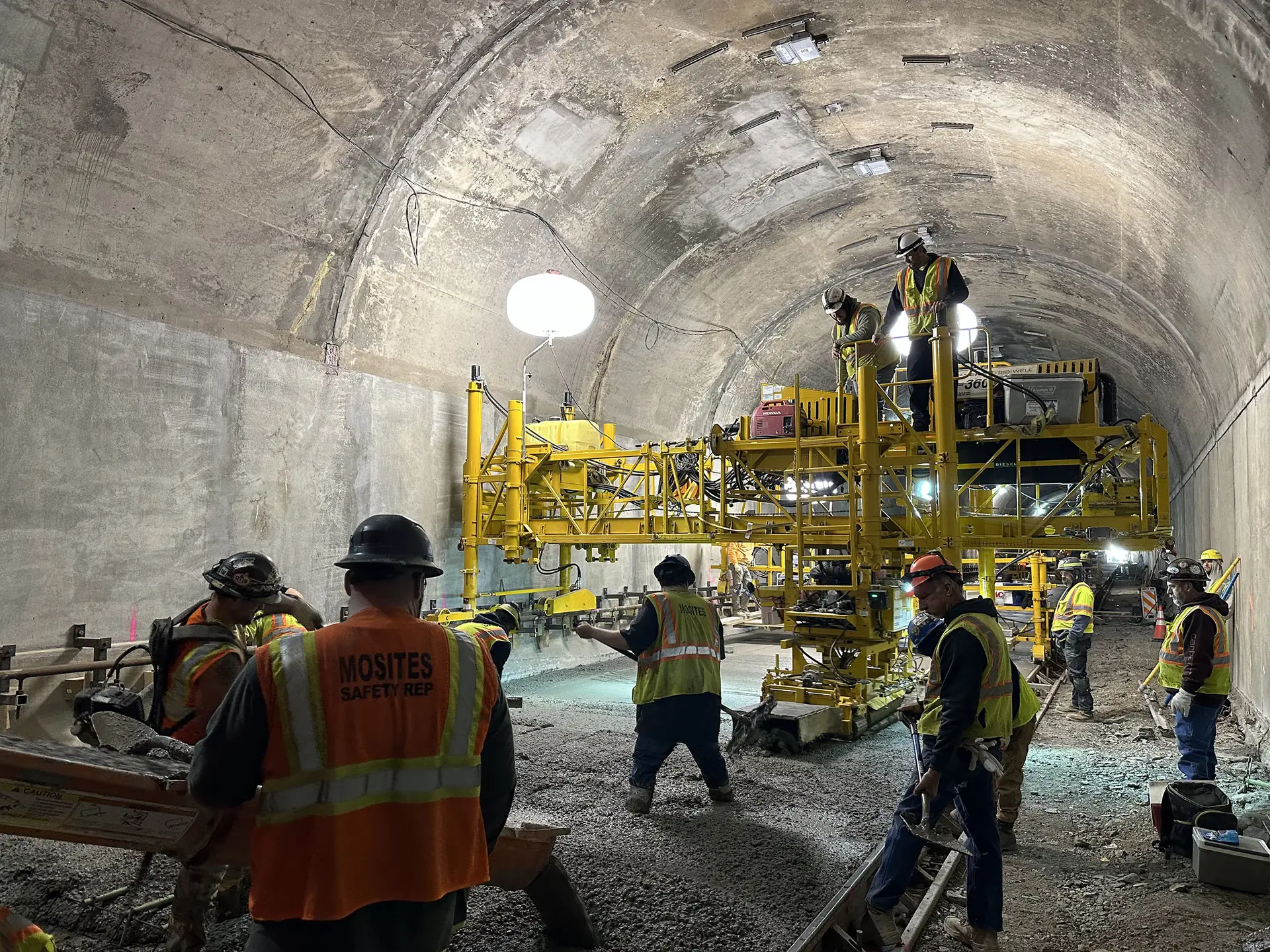
The Armstrong Tunnel Rehabilitation project restored and modernized a critical transportation connection between Downtown Pittsburgh, Uptown, and the Second Avenue corridor. Originally constructed in the early 1920s, the tunnel remains an important route for daily commuters and visitors traveling through the City of Pittsburgh.
Mosites completed the rehabilitation within a dense urban environment requiring detailed coordination, traffic management, and phased construction operations. The project included structural concrete repairs, replacement of the tunnel wall system, masonry restoration at the portals, upgraded lighting and electrical systems, new life safety infrastructure, roadway paving, drainage improvements, updated signage, and enhanced pedestrian accommodations throughout the corridor.
The rehabilitation focused on improving long-term durability, operational safety, and the overall user experience while preserving the character of one of Pittsburgh’s historic transportation assets. Upgraded tunnel systems, modernized lighting, and improved roadway geometry helped extend the service life of the structure and enhance safety for both motorists and pedestrians traveling through this highly visible corridor.